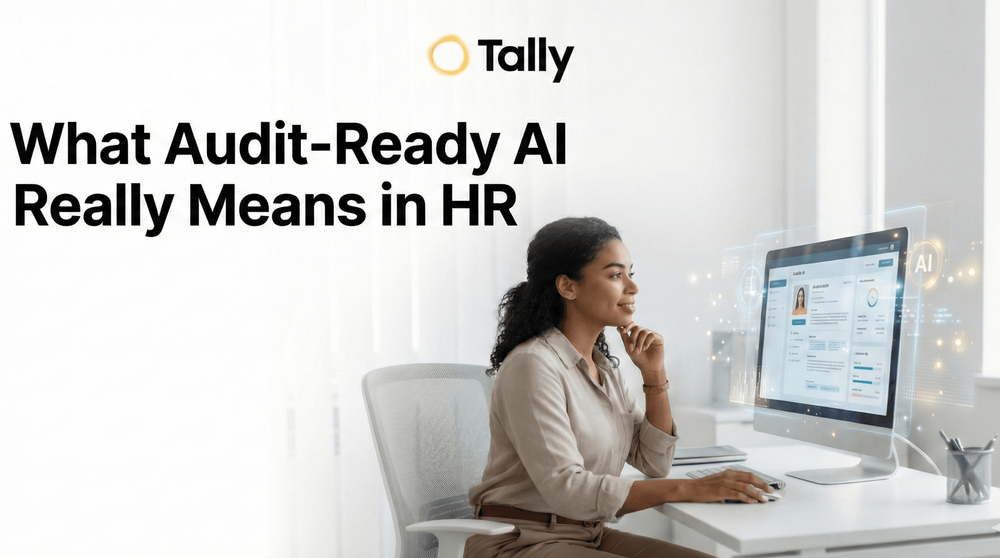
What “Audit-Ready AI” Really Means in HR, And Why Most Recruiters Are Overlooking It.
8 April 2026
AI is now embedded in everyday recruitment, from CV screening and candidate ranking to outreach automation and interview preparation. Many recruiters are already using AI tools, whether officially approved or informally integrated into their workflow. Yet there’s a critical question few are asking: if your hiring decisions were audited tomorrow, could you clearly explain how your AI reached its conclusions? That is what audit-ready AI really means. It’s not just about accuracy or speed; it’s about traceability. Audit-ready systems create a clear, defensible record of how decisions are made, why a candidate was shortlisted or rejected, what criteria influenced rankings, how job requirements were interpreted, whether protected characteristics were excluded, and how bias safeguards were applied. In an era where recruitment decisions are increasingly subject to legal and regulatory scrutiny, transparency is no longer optional. It’s a professional safeguard.
What many recruiters don’t realise is that most conventional AI tools operate as black boxes. They generate outcomes without documenting the decision pathway behind them. They rank candidates without justification, learn from opaque datasets, and often provide no audit trail that can withstand compliance review. This creates a hidden vulnerability. If a hiring outcome is challenged, whether through a discrimination claim, an internal investigation, or regulatory review, recruiters may find themselves unable to explain the role AI played. Under emerging AI governance frameworks in the US, EU, and UK, relying on a tool without understanding its decision logic is not a defensible position.
Accountability ultimately sits with the organisation and the recruiter using the system, not the vendor who built it. Recruitment is becoming one of the most scrutinised applications of AI because hiring decisions directly affect access to opportunity and protected classes. Regulators are moving toward standards that resemble financial auditing: documented decision logic, consistent evaluation criteria, bias mitigation records, traceable workflows, and clear human oversight. Using non-auditable AI in this environment is like running payroll without accounting records; it may function smoothly until someone asks for proof. And when that happens, the risks are real: legal exposure, reputational damage, compliance breaches, candidate distrust, and executive accountability.
Audit-ready AI shifts the conversation from convenience to governance. It ensures every decision has a trail, every ranking is explainable, every workflow is reviewable, and every outcome is defensible. This isn’t about slowing hiring down; it’s about future-proofing recruitment. Organisations that adopt audit-ready infrastructure early will build candidate trust, pass compliance reviews with confidence, protect their recruiters, and scale responsibly. The question is no longer whether AI helps hiring move faster; it’s whether hiring decisions can stand up to scrutiny. As regulations tighten globally, audit-ready AI is moving from a nice-to-have to a foundational requirement. Recruiters who understand this shift early won’t just be using AI, they’ll be leading responsible hiring in an accountable future.